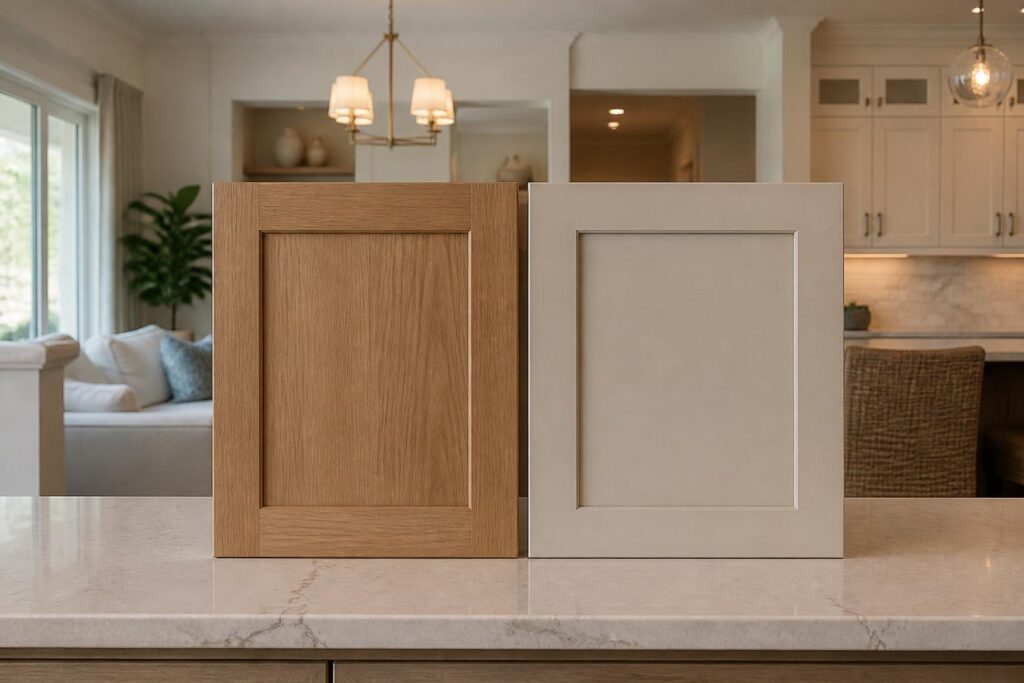

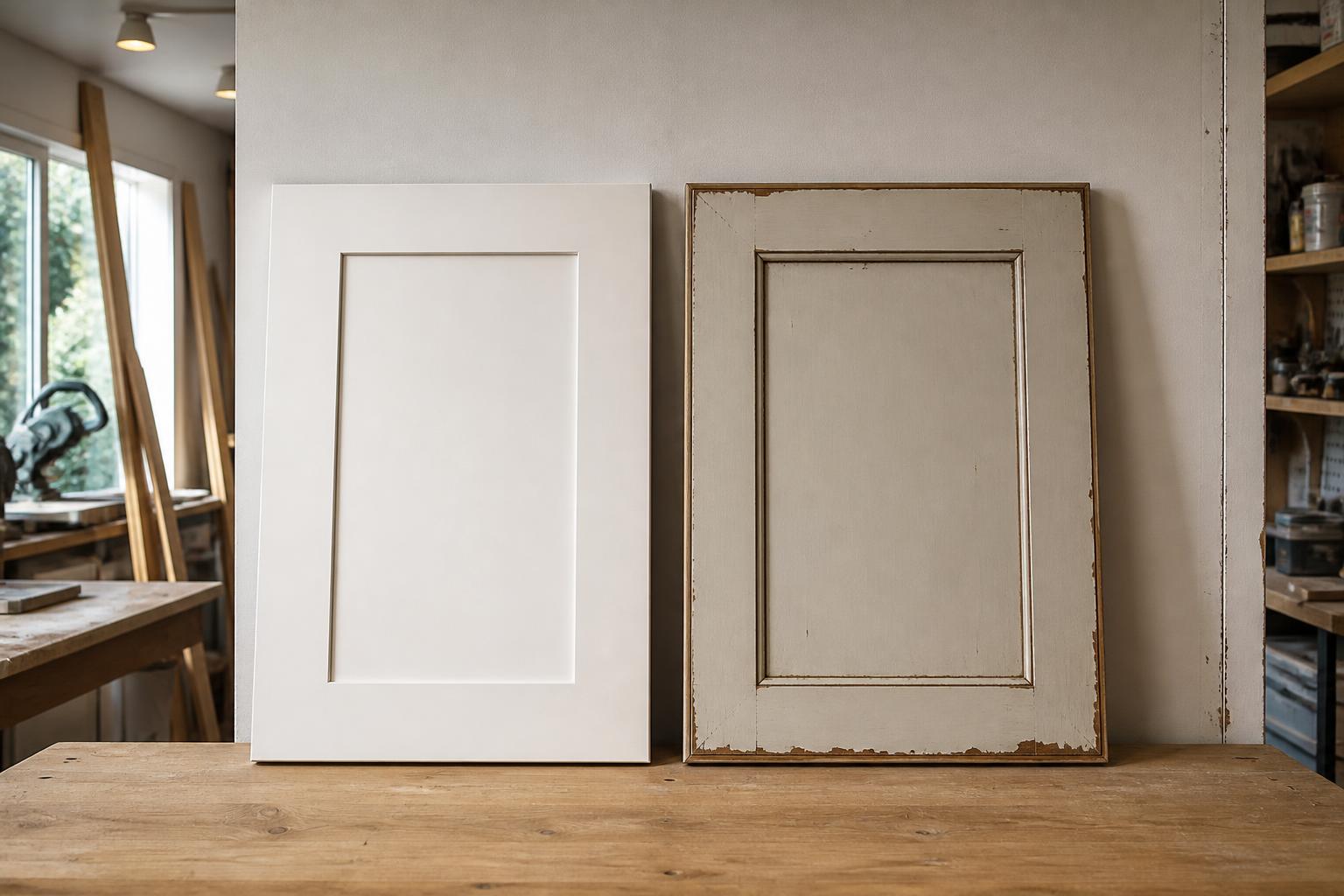
Your cabinets are dated, but the kitchen layout works, and a can of paint looks like the sensible first move. Before you buy brushes and sprayer time, it helps to understand cabinet refacing vs painting as two different kinds of update, not two prices for the same result. One changes the color of what you already own. The other changes the doors, drawer fronts and visible surfaces themselves.
We specialize in refacing, and we don’t offer standalone cabinet painting. That means we have a stake in this question, so we’ll try to be fair about it. Painting is a reasonable choice in some kitchens, and we’ll say when.
What Each Option Actually Changes
Painting leaves every part of your cabinets in place. The same doors, the same profiles, the same drawer fronts and the same hardware holes stay. Only the surface color changes. If the doors have a raised panel you’ve never liked, it will still be a raised panel after painting, just a different shade.
Cabinet refacing keeps suitable cabinet boxes and replaces the doors, drawer fronts and visible finishes. You choose a new door style, a new material and a new finish, and the exposed faces of the boxes are covered to coordinate. The boxes stay on the wall, and so does your layout. If you want a flat-panel look, a Shaker profile or a different hardware arrangement, refacing is the option that can deliver it. You can read more about how cabinet refacing works on our service page.
Cabinet Refacing vs Painting: How Each Holds Up Over Time
Durability
It depends on the cabinets you’re starting with, but there are some patterns worth knowing.
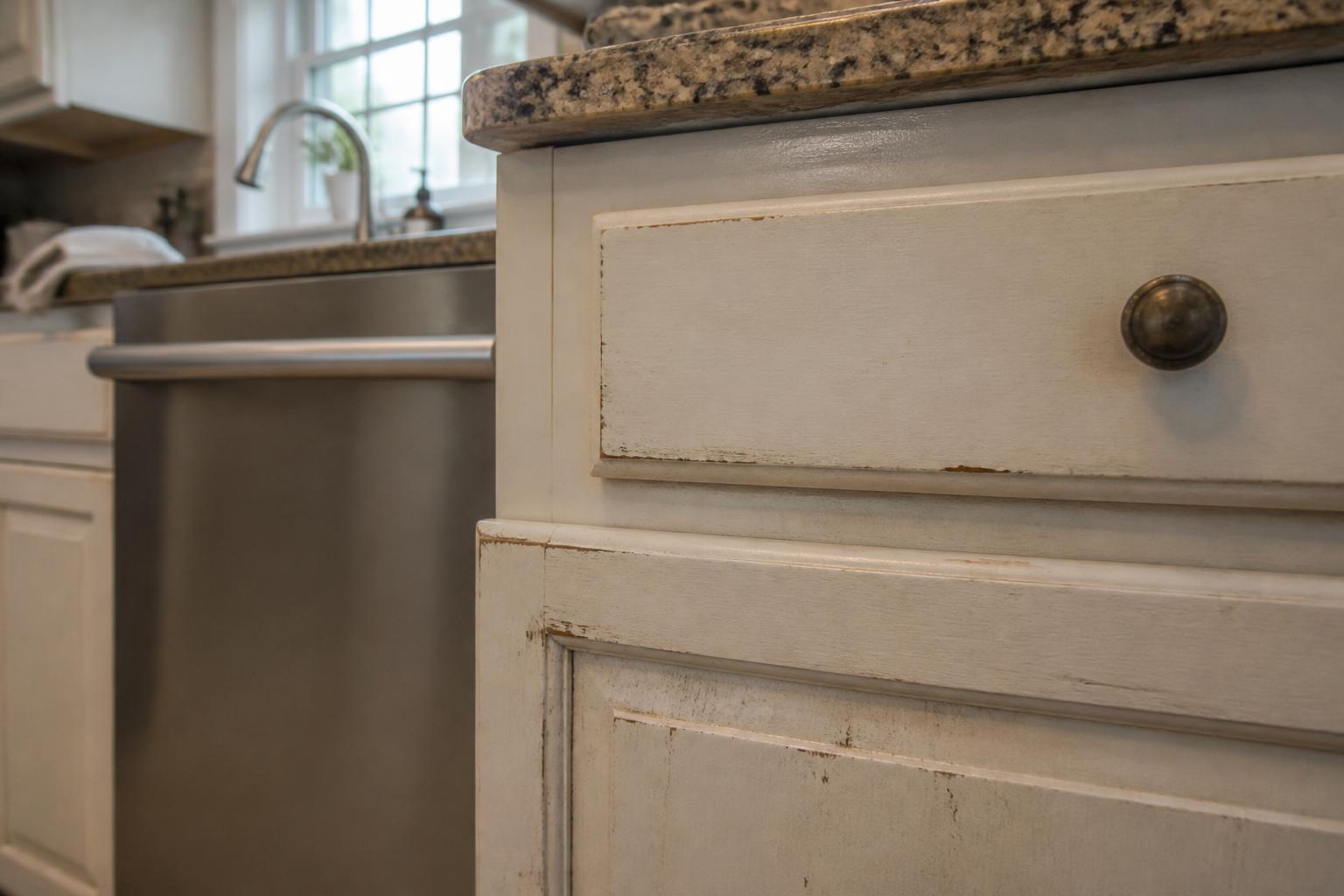
Painted cabinets get their durability from the paint system, which means the cleaning, sanding, primer and topcoat underneath. A well-prepared painted finish can look good for years. The weak points are the places your hands and water reach most: around pulls, along door edges, and near the sink and dishwasher. Chips and worn corners tend to show up there first, and touch-ups on a painted edge are visible because the color and sheen rarely match perfectly after the finish ages.
Refaced cabinets usually wear differently because the new doors and drawer fronts are new parts with their own surface, not a coating applied over an old one. That doesn’t make them immune to damage, but you’re not depending on a coating bonding to decades-old finish. We say “usually” on purpose. The result still depends on the quality of the new fronts and the condition of the boxes they’re attached to.
Neither option fixes a cabinet box that’s failing. If the structure is swollen, sagging or soft, no surface choice will hold up. That’s part of why we look at the condition of the boxes first.
Finish quality and the look you end up with
Painted cabinets can look very good when the work is careful. The difficulty is that old doors carry their history with them. Wood grain can telegraph through paint, and old dings and seams show under raking light.
New doors start with a clean, uniform face. Edges are consistent, panels are square, and the reveals between doors and drawers can be lined up when the fronts are fitted. If the look you want is crisp and even, that’s an advantage for refacing. If you like the character of your existing doors and just want a new color, painting preserves it.
You can see the kind of finished kitchens we do on our projects page.
How each holds up in humid Florida kitchens
Southwest Florida is hard on kitchen finishes. Humidity is high for much of the year, cooking steam adds to it, and homes near the water deal with salt in the air, which can be rough on metal hardware and can slowly work at weak spots in a finish.
Moisture tends to find the edges first. On a painted door, a chip at a corner lets humidity into the wood or board underneath, and the paint can lift or the door can swell slightly from there. A refaced door is a new part with its own surface, so you aren’t relying on a coating bonding to an old edge. How it handles humidity still depends on the surface you choose, and we’ll go over that with you.
No finish replaces ventilation, though. Running the range hood and wiping up standing water near the sink protect cabinets, whether painted or refaced.
Prep, Mess and Disruption
Painting is more involved than most people expect. Doors and drawer fronts are usually removed, degreased, sanded, primed and coated, and the boxes are prepared in place. Between coats the finish needs to cure before it’s handled.
Refacing installation is usually about three days, depending on scope, once selections are final and materials are on hand. The new fronts are ordered to fit your cabinets, so there’s less finishing work in your kitchen than with a multi-coat paint process. You’ll still have work in the house, but it’s typically a shorter and tidier stretch.
When Painting Makes Sense and When New Doors Fit Better
Painting can be a good fit when:
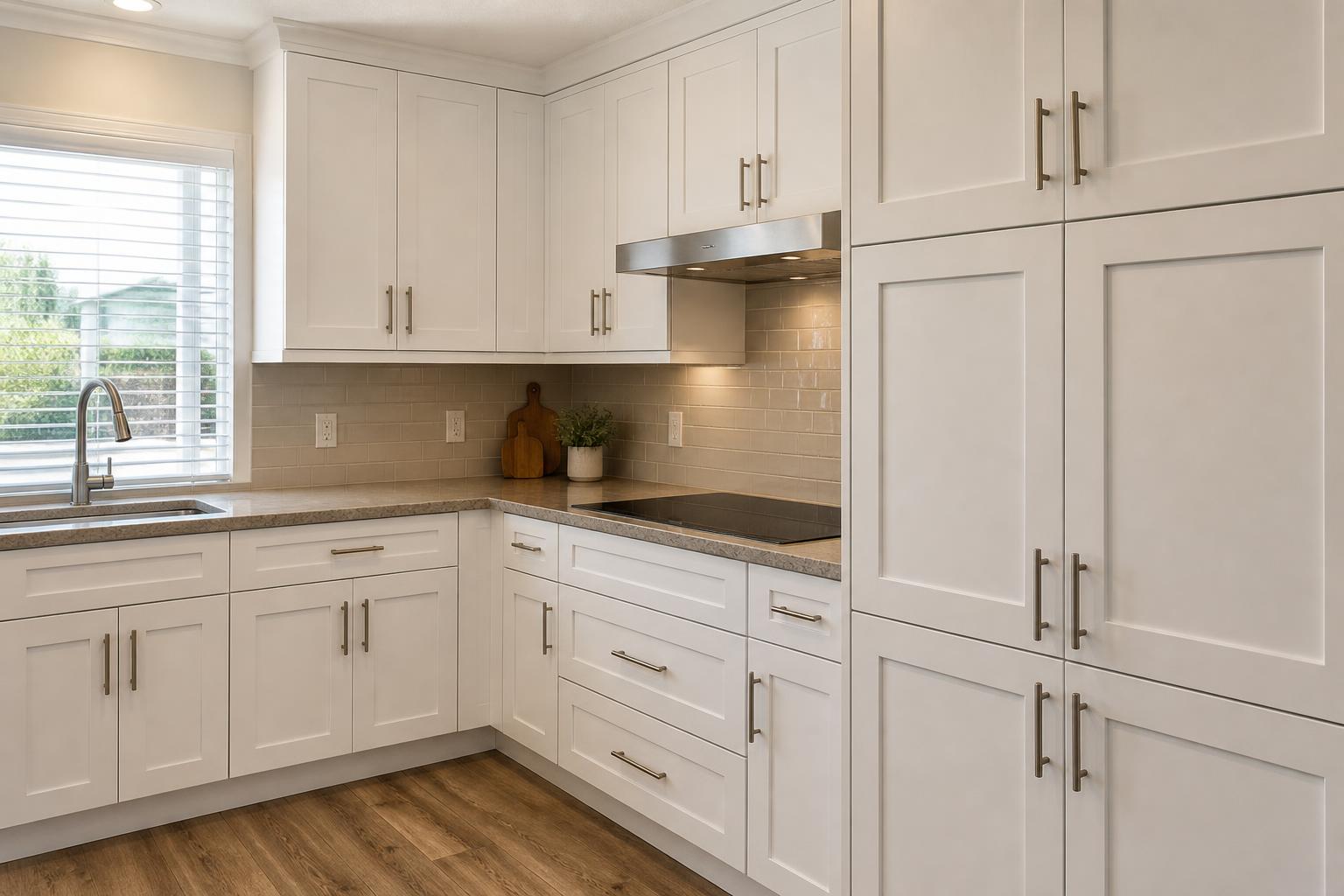
- The doors and drawer fronts are in good shape, with no swelling, cracking or peeling.
- You already like the door style and the hardware arrangement.
- You’re comfortable with a visible edge or two aging over time, and with the prep time involved.
- The goal is a color change rather than a different look.
New doors and drawer fronts tend to be the better fit when:
- You don’t like the door profile and a new color won’t solve that.
- Edges around the sink, dishwasher or stove are worn, swollen or peeling.
- You want a more functional layout inside the same footprint, such as converting a base cabinet from doors to a bank of drawers or adding pull-out shelves.
- You want new hardware, including soft-close options where specified, planned with the fronts.
It’s also worth being clear about the limits of both. Neither painting nor refacing changes where cabinets sit. If the layout itself doesn’t work for you, new kitchen cabinets may be a better path, and we can help you think through that too.
Weighing cost without a number
Painting usually costs less up front than any option that replaces parts. That’s simply how it works. The question is what you get for the difference. Refacing usually costs less than full cabinet replacement, which is why many homeowners with sound boxes consider it, but the final figure depends on the size of the kitchen, the door style and the scope you choose. Every kitchen is different, so we’d rather look at yours first.
A useful way to compare is to ask what each option will still look like in several years, and how much of the kitchen it actually improves. A low-cost update that you’re disappointed with in a year is not necessarily the cheaper choice. For general guidance on planning a kitchen update, the National Kitchen & Bath Association offers consumer resources worth a look.
Frequently asked questions about cabinet refacing vs painting
Does a painted finish hold up as well as a refaced one?
It depends on the prep and on the cabinets you start with. Painted finishes rely on a coating bonding to an older surface, so chips tend to start at edges, pulls and the area around the sink. New fronts bring their own surface, which is usually more consistent. The condition of the cabinet boxes matters for both.
Can you paint over cabinets that are already painted or stained?
Yes, but the surface has to be cleaned, degreased and prepared properly first, or the new paint can peel. Glossy or oily surfaces near the stove need extra attention. We don’t offer painting ourselves, so we’d recommend asking any painter exactly how they prepare the surface.
Is refacing worth it if my cabinets are in good shape?
It can be, when the issue is the style rather than the condition. If you’d be happy with the existing door style in a new color, painting may be enough. If you want a different door profile, new hardware or interior upgrades like drawers in place of doors, refacing is built for that.
How long does cabinet refacing take compared with painting?
Installation is usually about three days of work in your home. Painting can take longer in your home because of prep and drying time between coats, though that varies with the painter and the size of the kitchen.
Choosing between the two is easier when someone looks at your actual cabinets. Call (239) 989-1045 or request a free consultation and we’ll check the boxes, talk through what you want to change, and tell you honestly whether refacing fits. We serve homeowners in Cape Coral, Fort Myers, Port Charlotte and Punta Gorda.