
If you’re asking how much cabinet refacing costs, the honest first answer is that it depends on your kitchen, not on a flat rate. Two homes with the same number of cabinets can land in very different places once door style, hardware and the condition of the boxes come into play. Below, we walk through what actually moves the price so you can plan with confidence and know what to bring up when someone visits your home.
How Much Does Cabinet Refacing Cost? Start With What Stays and What Changes
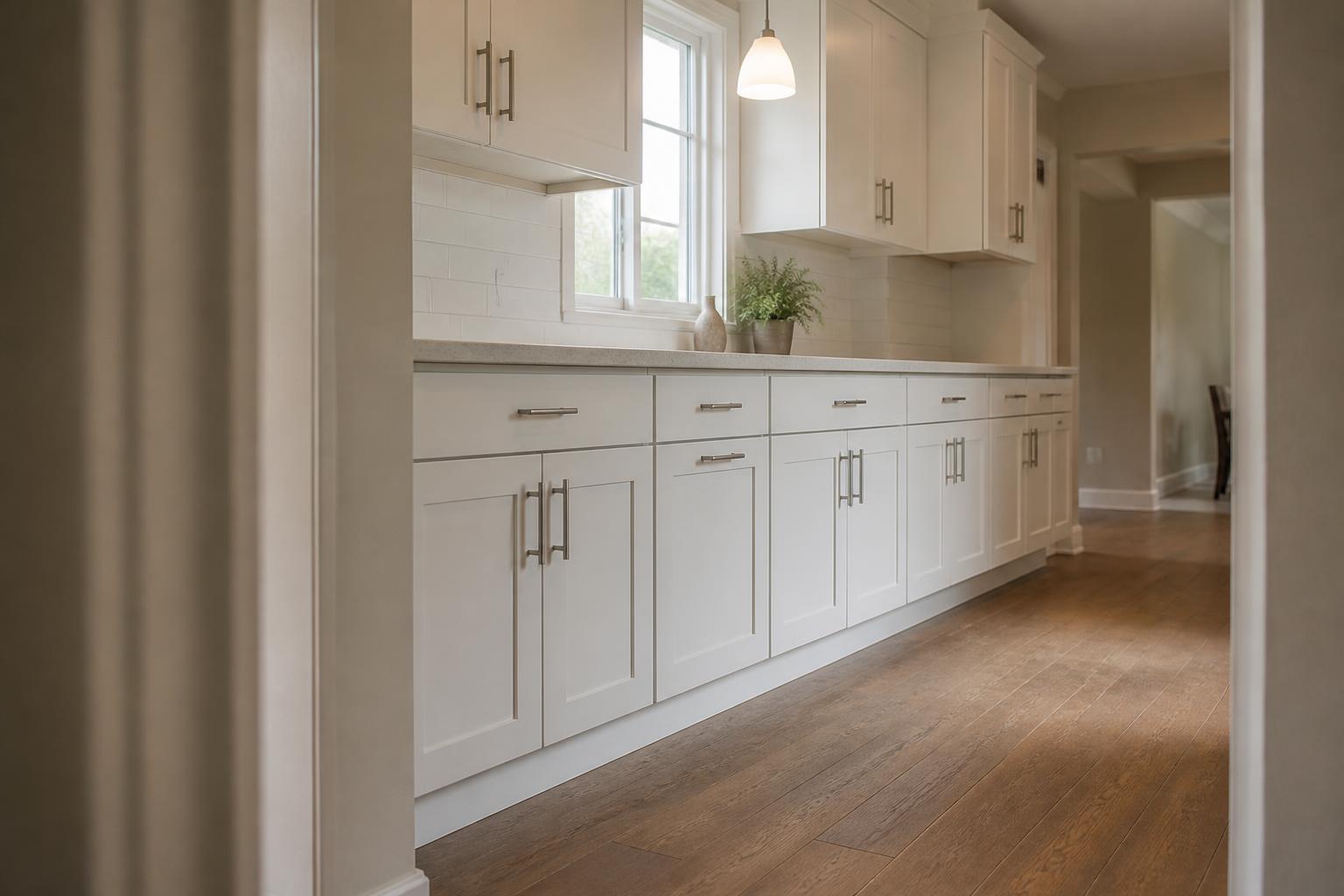
Refacing keeps the cabinet boxes that are still in good shape and replaces the parts you see and touch every day: doors, drawer fronts, visible box surfaces and hardware. Because the boxes, the layout and the wall work stay in place, there’s usually less material and less labor than tearing everything out. That’s the main reason cabinet refacing usually costs less than full replacement.
It also means the price follows the scope you choose. A small galley kitchen with plain fronts is a different project from a large kitchen with a pantry wall, an island and a lot of trim. We don’t believe in guessing a number over the phone, because the details below can swing the total in either direction.
The Biggest Cost Drivers
Number of doors and drawer fronts
Every door and drawer front is a new, custom-sized piece. A kitchen with 30 openings simply needs more pieces than one with 18, and each piece has to be ordered to size, finished and fitted. Count your doors and drawers and you’ll already have a feel for the size of the project.
Odd sizes matter too. Tall pantry doors, narrow filler doors and wide drawer fronts take more care than standard sizes, and they can change the total.
Door style and surface
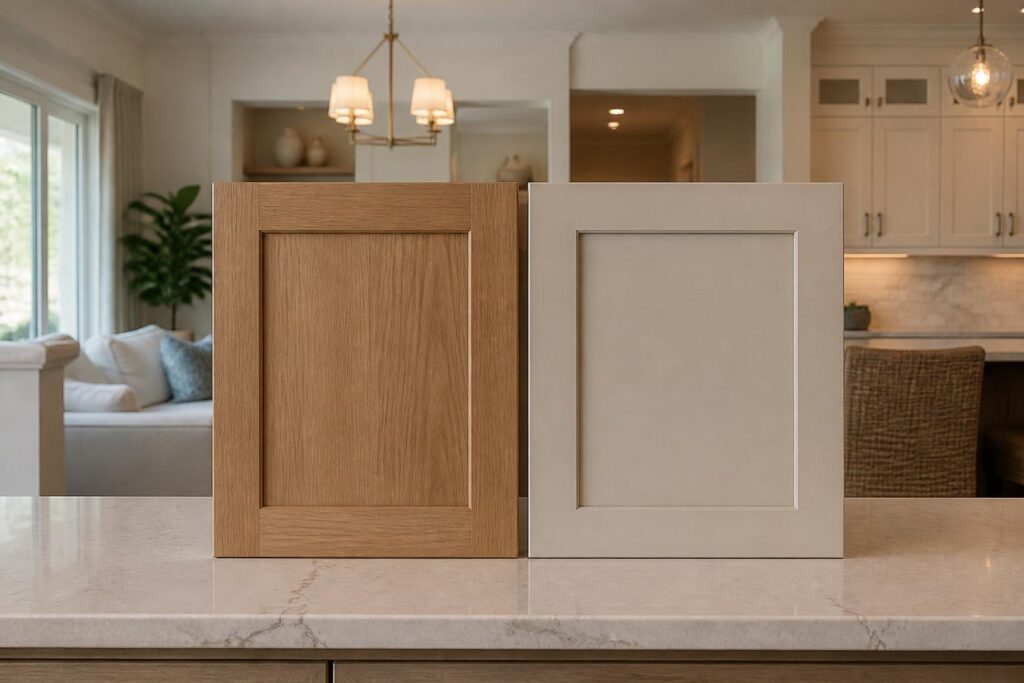
A simple flat or shaker-style door is typically more straightforward than a door with a detailed profile, glass inserts or a decorative panel. The surface you select matters as well, since different finishes are built differently and priced differently. We’d rather talk through your options with samples in hand than push you toward one.
In coastal Southwest Florida, it’s worth thinking about how a finish handles humidity, cooking moisture and salt air over the years. Ask about cleaning and wear for any surface you’re considering.
Hardware
New hinges and pulls are planned together with the new fronts. Basic hinges and handles cost less than soft-close hinges and larger, heavier pulls. Soft-close is a popular upgrade, and we can include it where specified. Hardware looks like a small line item, but across 30 or 40 openings the choices add up.
Functional upgrades
Refacing is also a chance to fix things that annoy you. Two upgrades we’re asked about often are converting a base cabinet from doors to a bank of drawers, so pots and pans pull straight out, and adding pull-out shelves inside existing cabinets so nothing disappears to the back.
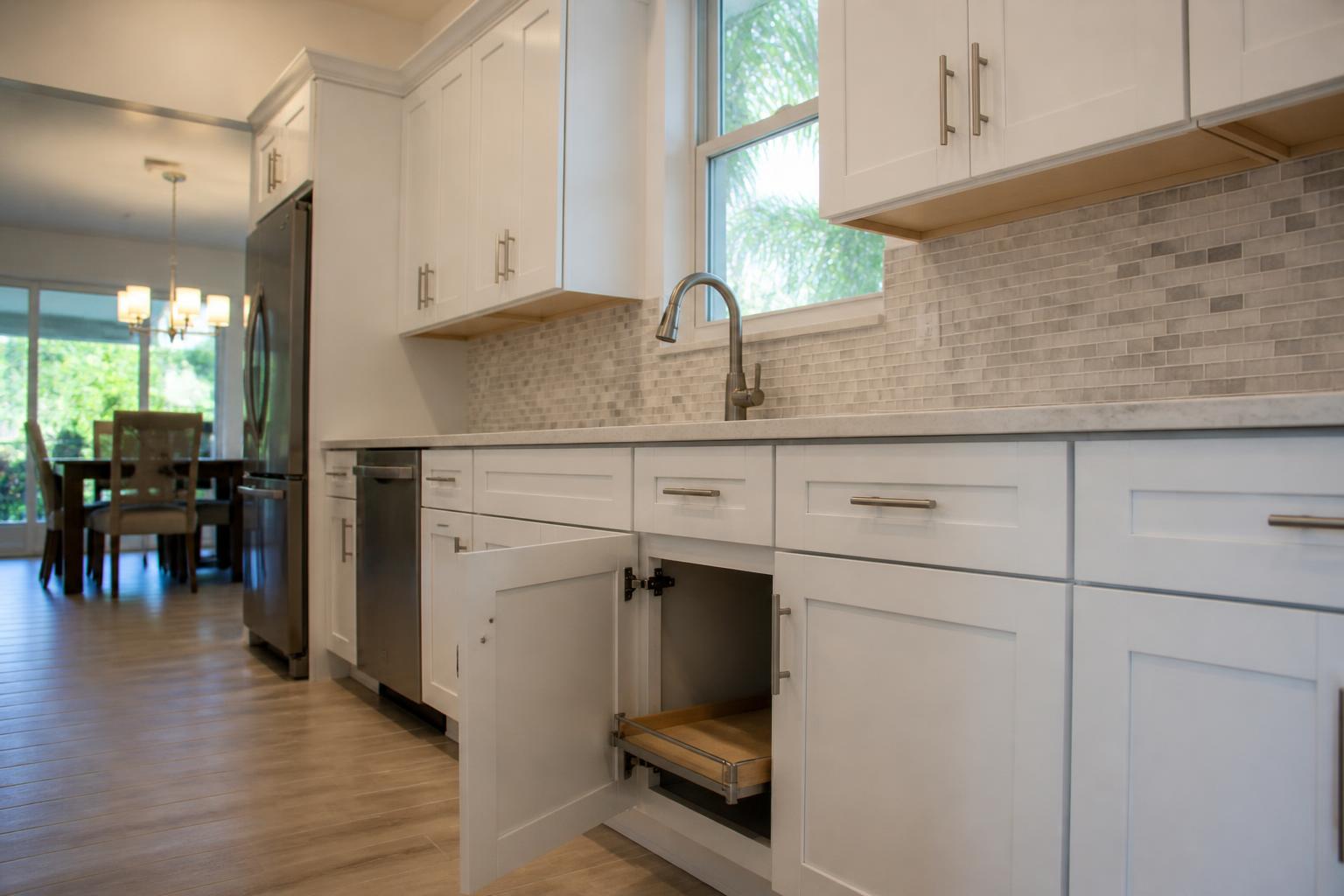
These upgrades add parts and labor on top of a basic refacing scope, so they affect the number. For many homeowners they’re the part of the project they appreciate most, so we’d rather you decide with the full picture.
End panels, fillers and trim
The exposed sides of cabinets, the toe-kick and the gaps between cabinets and walls all need to match the new fronts. Decorative end panels, crown molding and light-rail molding can add polish, and each one adds material and installation time. A kitchen with an exposed island side or a peninsula usually needs more finishing pieces than one tucked against walls.
Box condition and repairs
This is the factor people overlook. Refacing works when the existing boxes are sturdy. If a sink base has a swollen floor from an old leak, or a few shelves are sagging, those items need attention before new fronts go on. A localized problem, such as a damaged sink-cabinet floor, can be assessed separately, while widespread damage can change the whole recommendation. We’ll look at the frames, shelves and door mounting points in person before telling you what makes sense.
How Refacing Usually Compares With Replacement
Refacing generally costs less than replacing the cabinets, because you aren’t paying for all-new boxes, demolition and the repair work that often follows removal. That’s a comparison, not a promise. Once you add a lot of upgrades, or the boxes need serious repair, the gap can narrow.
Replacement makes sense when the boxes are damaged, the layout doesn’t work, or you want to move walls and appliances. If you’re weighing both options, new kitchen cabinets are the better path in those cases. We supply and install new cabinets, so we can give you an honest read on either route.
Disruption counts too. Refacing installation usually takes about three days, depending on scope, once selections are final and materials are on hand, and your sink, counters and appliances typically stay in place. Replacement tends to take longer and involves more of the kitchen, which is worth weighing alongside the number itself.
Why Cost Figures Online Can Mislead You
You’ll find plenty of averages online, and they can be useful for a rough sense of scale. The trouble is that they blend small kitchens with large ones, basic fronts with premium finishes, and sound boxes with damaged ones. A figure that fits someone else’s kitchen may say very little about how much cabinet refacing costs in yours.
If you want reputable general guidance on kitchen planning, the National Kitchen & Bath Association is a good place to start. For the real number on your own cabinets, though, someone has to look at them.
Why an In-Home Consultation Gives the Real Number
When we visit, we open doors and drawers, check the frames and shelves, measure the runs and note anything that needs repair. We also ask how you use the kitchen: what’s hard to reach, what overflows, what you’d change if you could. Those answers shape the scope, and the scope shapes the price.
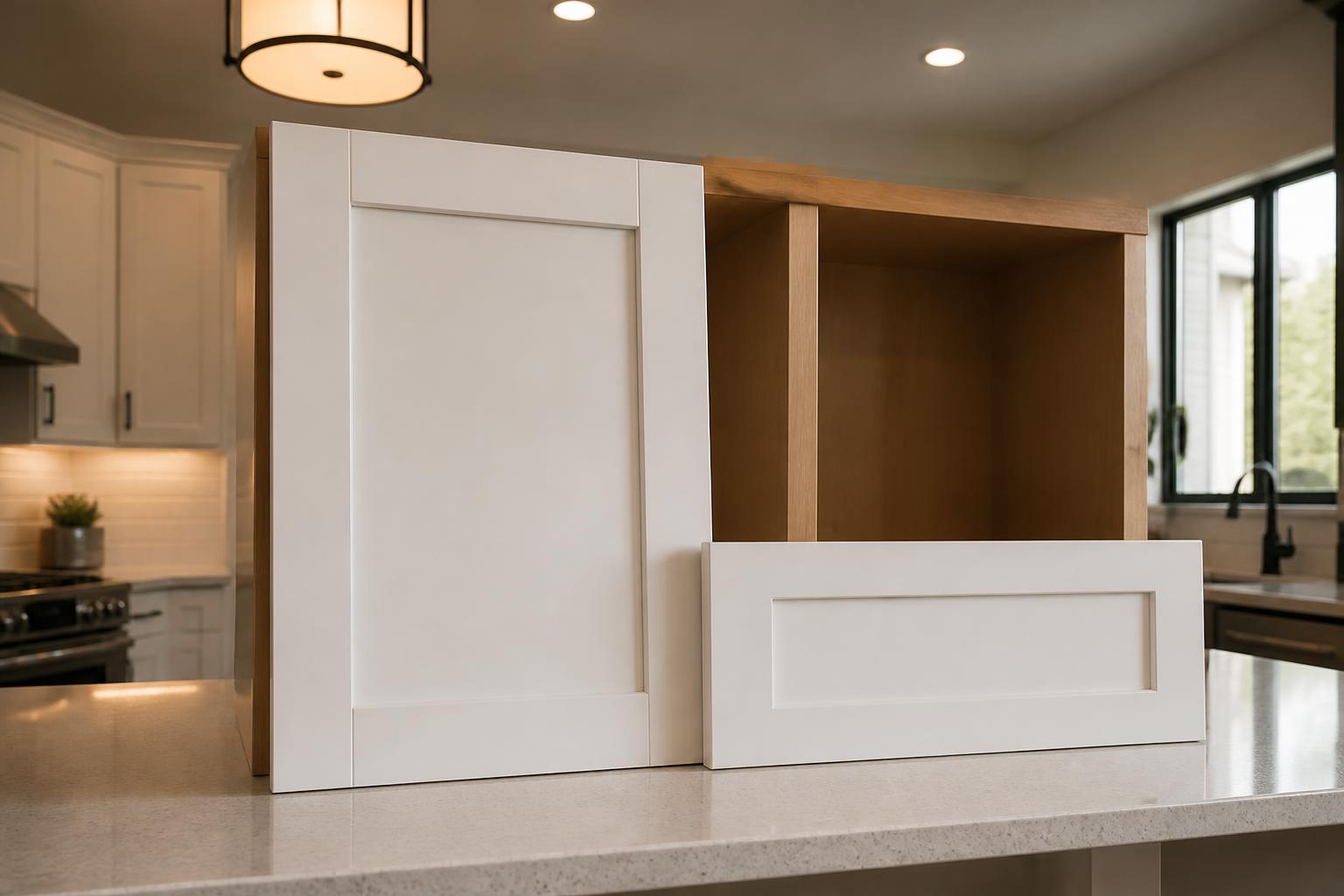
It helps to prepare a little before we arrive:
- Count your doors and drawers, or take a few photos of each wall of cabinets.
- Note any water damage, sagging shelves or doors that no longer close well.
- Decide which upgrades interest you, such as drawer banks, pull-out shelves or soft-close hardware.
- Think about the look you want, whether that’s a clean shaker style or something more traditional.
Many of the homes we see in Southwest Florida were built between the 1980s and 2000s, and their cabinet boxes are often solid even when the doors look dated. That’s the situation where refacing tends to shine, and a careful look at the boxes is how we confirm it.
Frequently asked questions about cabinet refacing cost
Does refacing cost less than new cabinets?
Usually, yes, because we keep the existing boxes and replace the fronts and visible surfaces. The difference depends on how many upgrades you add and whether the boxes need repair, so we compare both options for your kitchen during the consultation.
Will drawer conversions and pull-outs change the price?
They will. Converting a base cabinet from doors to drawers and adding pull-out shelves both require extra parts and labor beyond a standard refacing scope. We’ll talk through what each one adds during the consultation.
Can you give me a number over the phone?
We’d rather not, since the door count, style, upgrades and cabinet condition all change the total. A short in-home visit lets us measure and inspect, and the consultation is free.
What if my cabinet boxes are damaged?
Localized damage, such as a worn sink base, can be assessed separately. If the damage is widespread, new cabinets may be the more sensible choice, and we’ll tell you so.
What should I share to get an accurate cabinet refacing cost?
Share photos of each cabinet wall, a door and drawer count, any water damage or sagging shelves, and the door style, hardware or storage upgrades you are considering. Then request an in-home consultation so Balance Construction can inspect the boxes and measure the kitchen before outlining the scope.
If you’re ready to find out what your own kitchen would involve, Call (239) 989-1045 or request a free consultation and we’ll look at your cabinets with you, from Cape Coral to Fort Myers, Port Charlotte and Punta Gorda.