
Your cabinets look tired, and now you’re stuck on one question: should I reface or replace kitchen cabinets? Both choices can give you a kitchen that feels new, but they solve different problems. The right one depends mostly on what’s behind the doors, so it helps to look past the surface before you decide. Here’s how we think it through with homeowners, and what to check on your own before anyone visits.
Should I Reface or Replace Kitchen Cabinets? Start With the Boxes
The cabinet box is the structure: the sides, bottoms, shelves and the frame around the opening. Cabinet refacing keeps suitable existing boxes and replaces the doors, drawer fronts and visible finishes. That only works well when the boxes are sound.
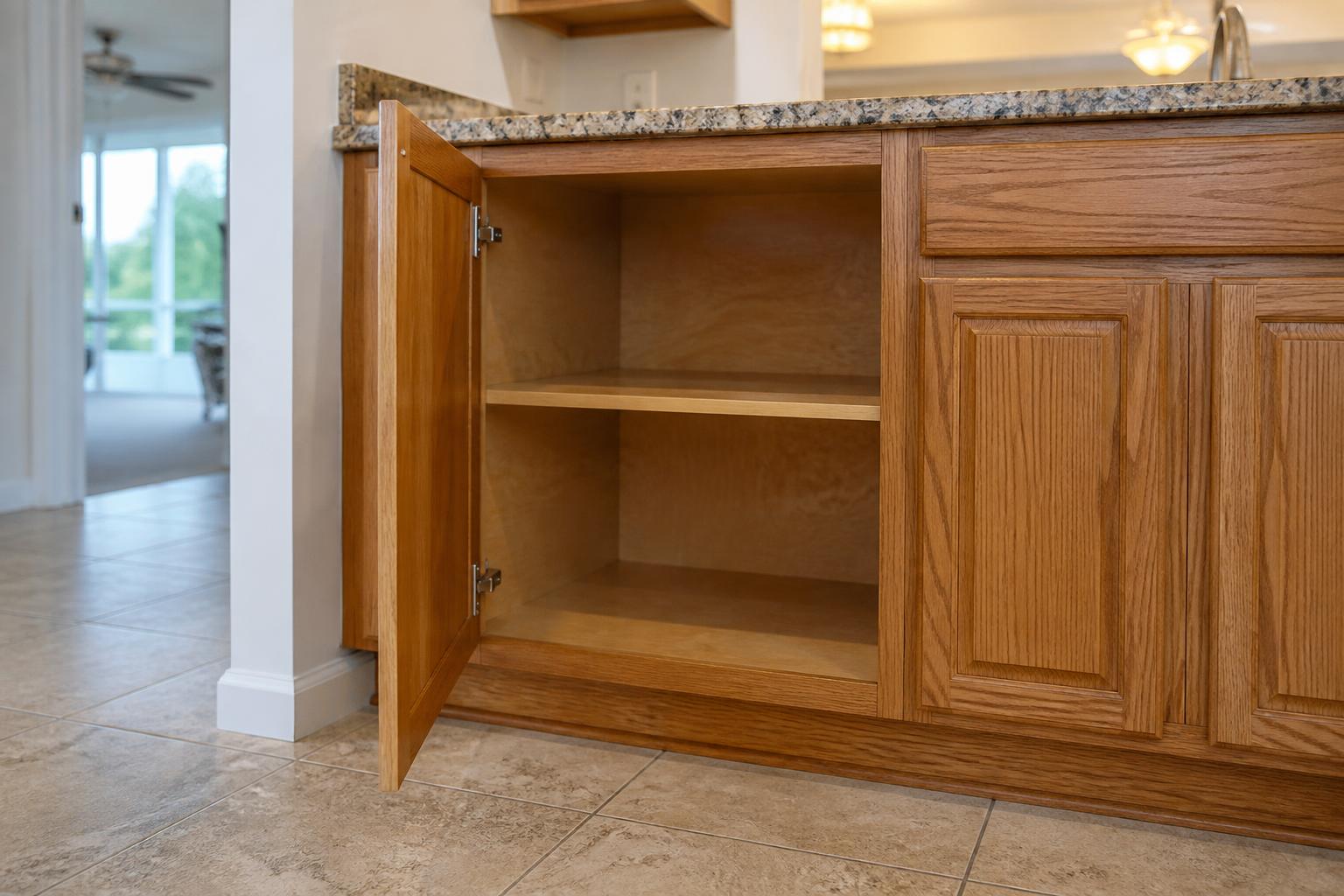
Open each base and wall cabinet and look inside. Press on the floor of the cabinet, run a hand along the shelves, and check whether the frame is solid where the hinges attach. If everything feels sturdy and straight, you probably have a good refacing candidate. If you find soft, crumbling or swollen material, you’re looking at a bigger conversation.
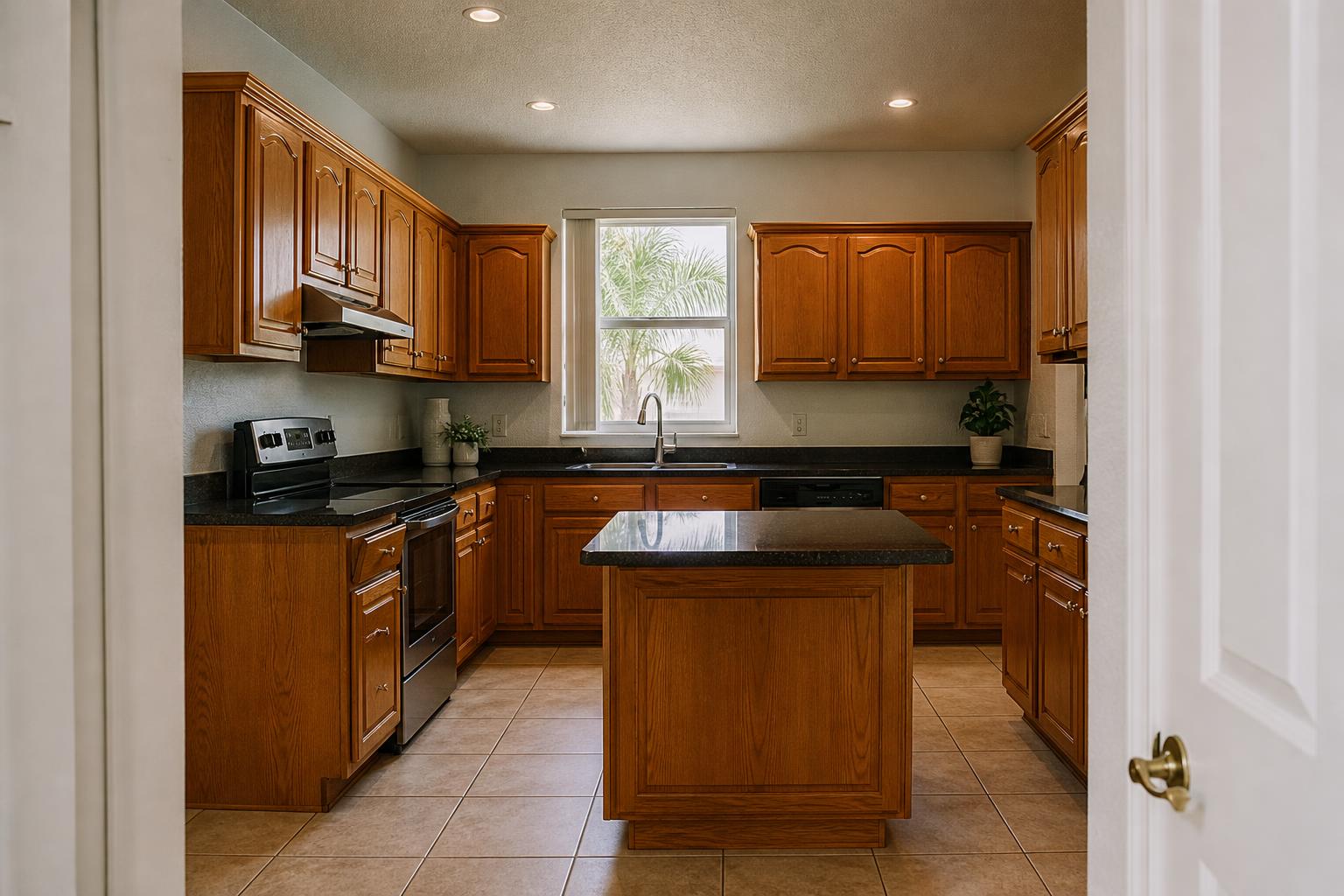
In many Southwest Florida homes built in the 1980s through the 2000s, the boxes are in better shape than the dated oak doors suggest. That’s a common and encouraging situation, but we confirm it by looking, never by assumption.
Does the Layout and Storage Actually Work for You?
Refacing changes how the kitchen looks. It doesn’t move cabinets, so the arrangement you have is the arrangement you keep. Ask yourself a few plain questions:
- Is there a comfortable path between the sink, stove and refrigerator?
- Do doors and drawers open without hitting each other or an appliance?
- Is there enough counter-side storage for the things you use daily?
- Would you rearrange anything if you could?
If you like how the kitchen works and just dislike how it looks, refacing fits. If you keep wishing a wall were somewhere else or an appliance sat in a different spot, new cabinets give you room to change the plan. Moving appliances, plumbing or electrical is separate work that needs to be planned alongside the cabinets.
Storage needs: what can be improved without starting over
Storage is where people often assume they must replace everything. In fact, a lot of frustration can be fixed inside the boxes you already have. We can convert a base cabinet from doors to a bank of drawers, so pots, pans and deep items pull straight out. We can also add pull-out shelves so nothing hides at the back.
Those upgrades solve the “I can’t reach anything” problem. They don’t solve a kitchen that’s simply too small for your needs. If you’re short on total cabinet space, or you want a tall pantry that the current layout can’t hold, replacement or added custom cabinets and built-ins may serve you better.
Water Damage and Other Warning Signs
Moisture is the biggest reason refacing isn’t the right call. Florida’s humidity, leaking sink supply lines and dishwasher seepage can all weaken cabinet material over time. A sink base with a stained, soft floor is the classic example.
Not every water problem rules out refacing. A single damaged cabinet floor can often be assessed separately, and the rest of the kitchen may be able to stay. When the swelling, warping or mold-prone damage runs through many cabinets, new fronts would only sit on a weak foundation, and replacement is the more sensible answer.
Other signs that point toward new cabinets include:
- Frames that are cracked, twisted or pulling away from the wall.
- Shelves that have sagged permanently.
- Hinge screws that no longer hold because the surrounding material has crumbled.
- Cabinet sizes that don’t suit your space or appliances.
Budget and Disruption
Refacing usually costs less than replacing the cabinets, since you’re not buying all-new boxes or paying for their removal. That’s a general comparison rather than a promise, because upgrades, trim and repairs all change the total. We go through those details during a visit so there are no surprises.
Disruption is the other side of the budget question. Refacing installation usually takes about three days, depending on scope, once selections are final and materials are on hand, and your sink, counters and appliances generally stay where they are. Replacement involves removing the old cabinets, fitting the new ones and finishing around them, which takes longer and touches more of the room.
Cost and disruption also depend on what you do around the cabinets. If you’d like new countertops or flooring at the same time, plan that separately with the right professionals.
If you’re a seasonal resident planning work around your stay, or you simply can’t go long without a working kitchen, the shorter timeline of refacing can make a real difference.
When New Cabinets Are the Better Answer
We specialize in refacing, but we’re not here to talk you into it. New cabinets are the better answer when the boxes are damaged, when the layout needs to change, when the sizes no longer suit your space, or when changing the fronts wouldn’t solve what’s bothering you.
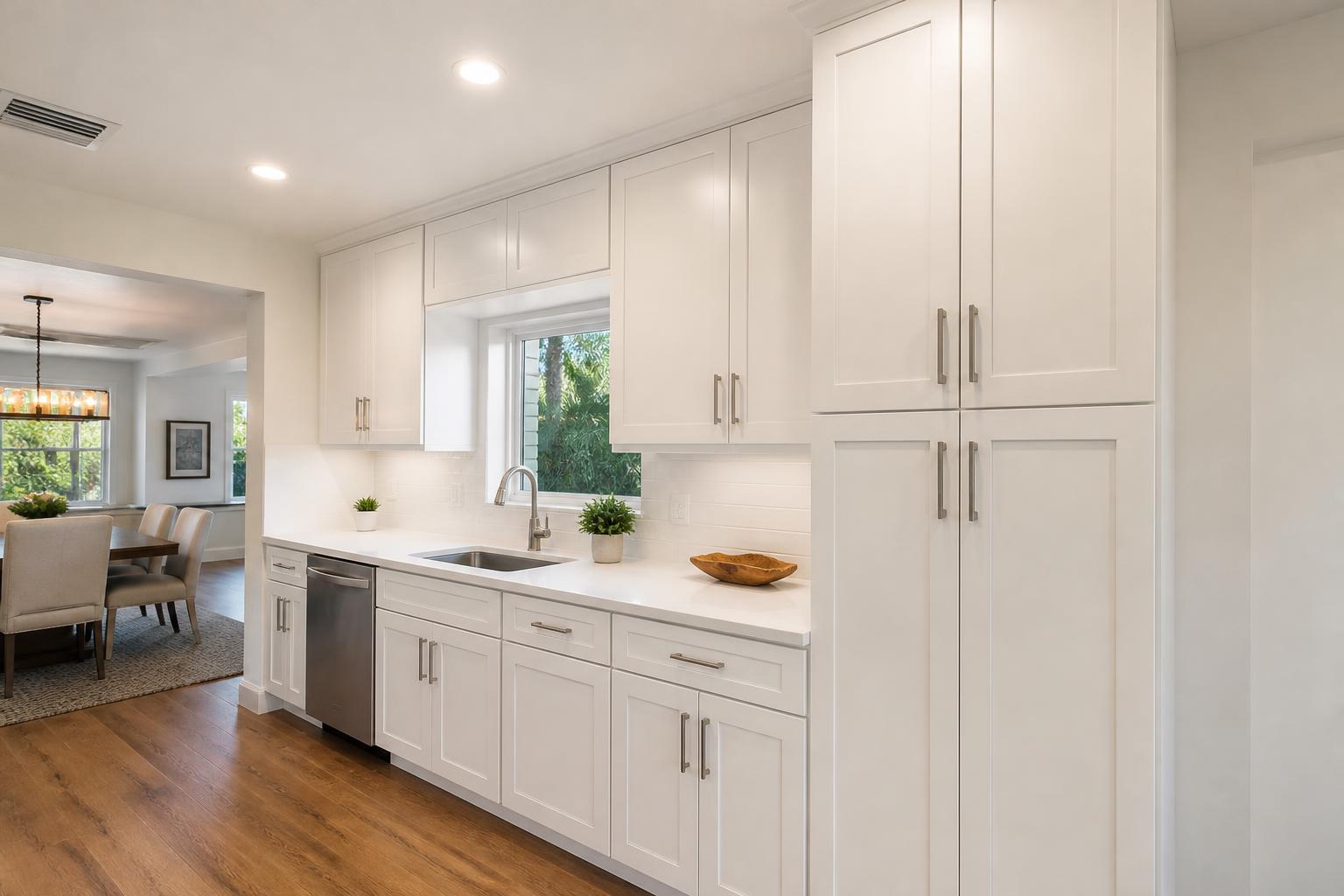
When that’s the case, we supply and install new kitchen cabinets and plan the arrangement with you. We don’t build cabinets in-house, and we’ll go through the available options, dimensions and finishes together before anything is ordered.
Whichever way you lean, it’s smart to work with a licensed professional. You can confirm a contractor’s credentials through the Florida Department of Business and Professional Regulation license lookup. Ours is a Florida Certified Building Contractor license, CBC1253747.
A simple way to decide
If you want a quick gut check before we visit, run through this:
- Boxes sturdy, layout fine, you want a fresh look: refacing is likely a good fit.
- Boxes sturdy, but a few cabinets are awkward to use: refacing with drawer conversions or pull-outs may solve it.
- Widespread water damage or weak frames: plan on new cabinets.
- Layout frustrates you or you need much more storage: new cabinets, or added built-ins, give you more freedom.
Treat that as a starting point, not a verdict. A sound kitchen with a few quirks is common, and so is a kitchen where one problem cabinet hides a wider issue. The condition of the boxes is the deciding factor, and it’s much easier to judge in person.
Frequently asked questions about reface or replace decisions
Can I reface just some of my cabinets?
It’s usually better to treat a run of cabinets as one project so the doors, drawer fronts and surfaces match. If one cabinet has damage, we’ll look at it in person and tell you whether the others can still be refaced.
Will refacing change my cabinet layout?
No. The boxes stay where they are, so the arrangement is the same. You can improve how a cabinet works, such as turning a door base into drawers, but moving cabinets means choosing new ones.
How do I know if water damage rules out refacing?
Press on the floor of your sink base and look for soft spots, swelling or staining. A single damaged area can often be assessed separately, while damage spread across several cabinets usually points toward replacement. We check this during the visit.
Do you install new cabinets as well as reface?
Yes. We supply and install new kitchen cabinets, and we’ll tell you honestly which option suits your kitchen better after looking at it.
Whichever direction your kitchen points, we’re glad to look at it with you, so Call (239) 989-1045 or request a free consultation and we’ll give you a straight answer, whether you’re in Cape Coral, Fort Myers, Port Charlotte or Punta Gorda.