

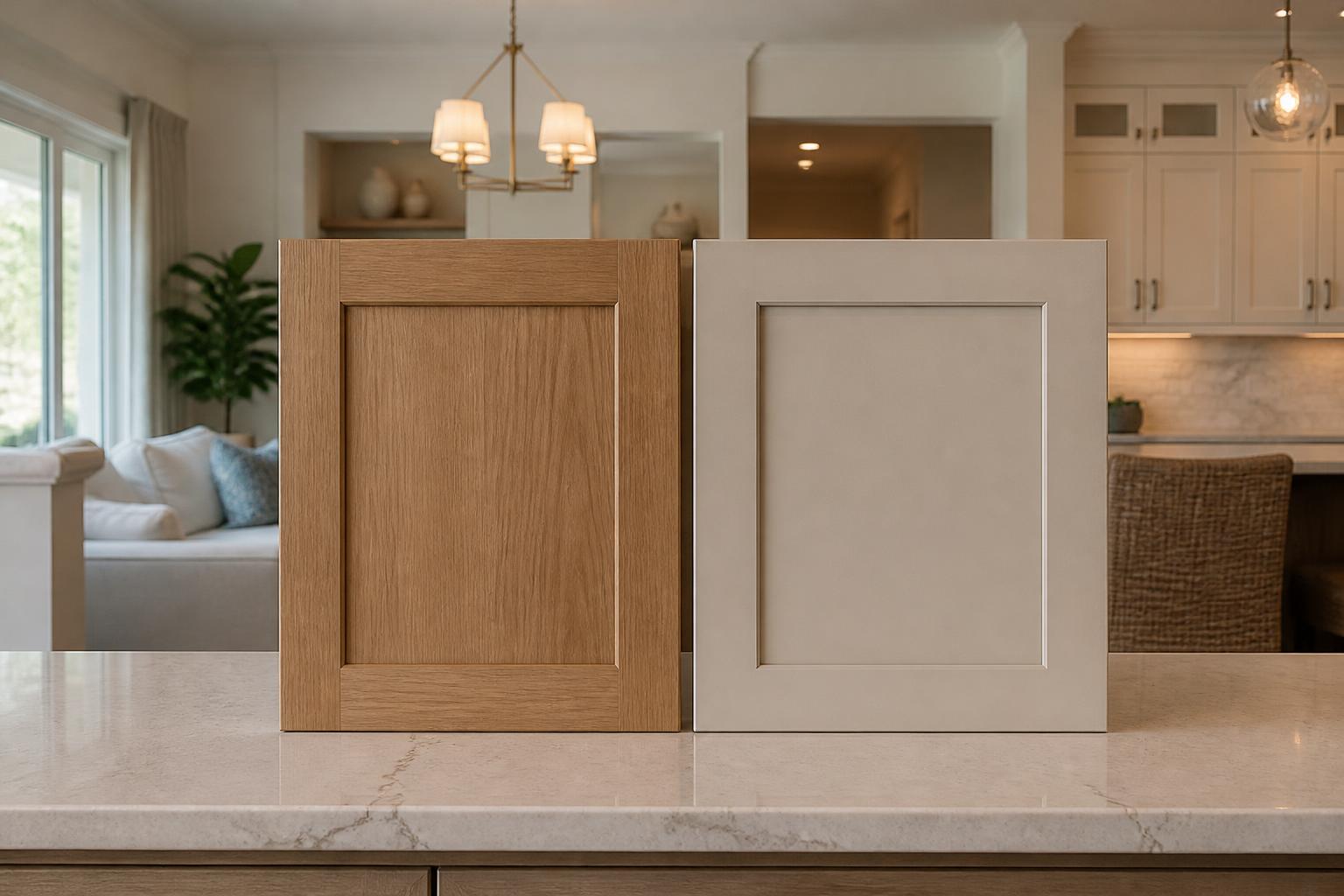
When you start planning a refacing project, the first big choice after door style is the surface itself. Comparing wood veneer vs laminate cabinet refacing options comes down to how much you value natural grain, how hard your kitchen works, and how each material behaves in a humid climate like ours. Neither is automatically better, and the right answer depends on your kitchen.
Below is a plain-language guide to how these surfaces generally behave, with a few Southwest Florida considerations. We review surface options with you at the consultation, so use this as background for that conversation, not a shopping list.
First, What You’re Actually Choosing
Cabinet refacing keeps suitable existing boxes and replaces the doors, drawer fronts and visible finishes. The surface material on those new parts, and on the exposed faces of the boxes, is what you see and touch every day. That’s why the choice matters even though it’s only a thin layer.
A wood veneer is a thin slice of real wood bonded to a stable base. A laminate is a layered, printed or solid-color surface that’s pressed and bonded to a base. Thermofoil, which comes up often, is a vinyl film that’s heat-formed over a shaped base. You can read about what cabinet refacing includes on our service page.
How Wood Veneer and Laminate Look
Wood veneer
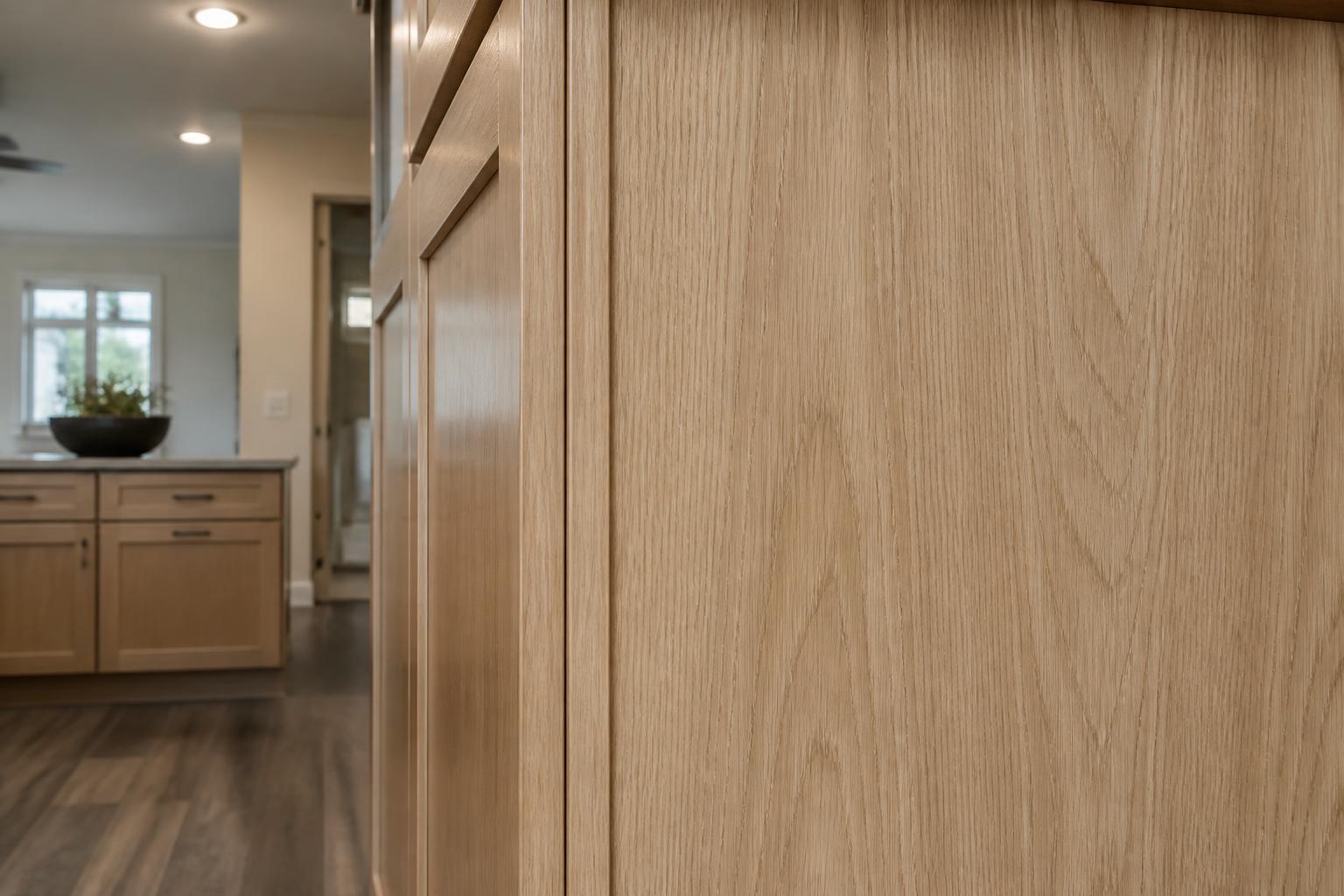
Because veneer is real wood, you get true grain, natural variation and a surface that takes stain or a clear coat. No two doors are identical, which many homeowners like and some find too unpredictable. Veneer can be finished to look warm and traditional or sleek and modern, depending on the species and finish.
Laminate
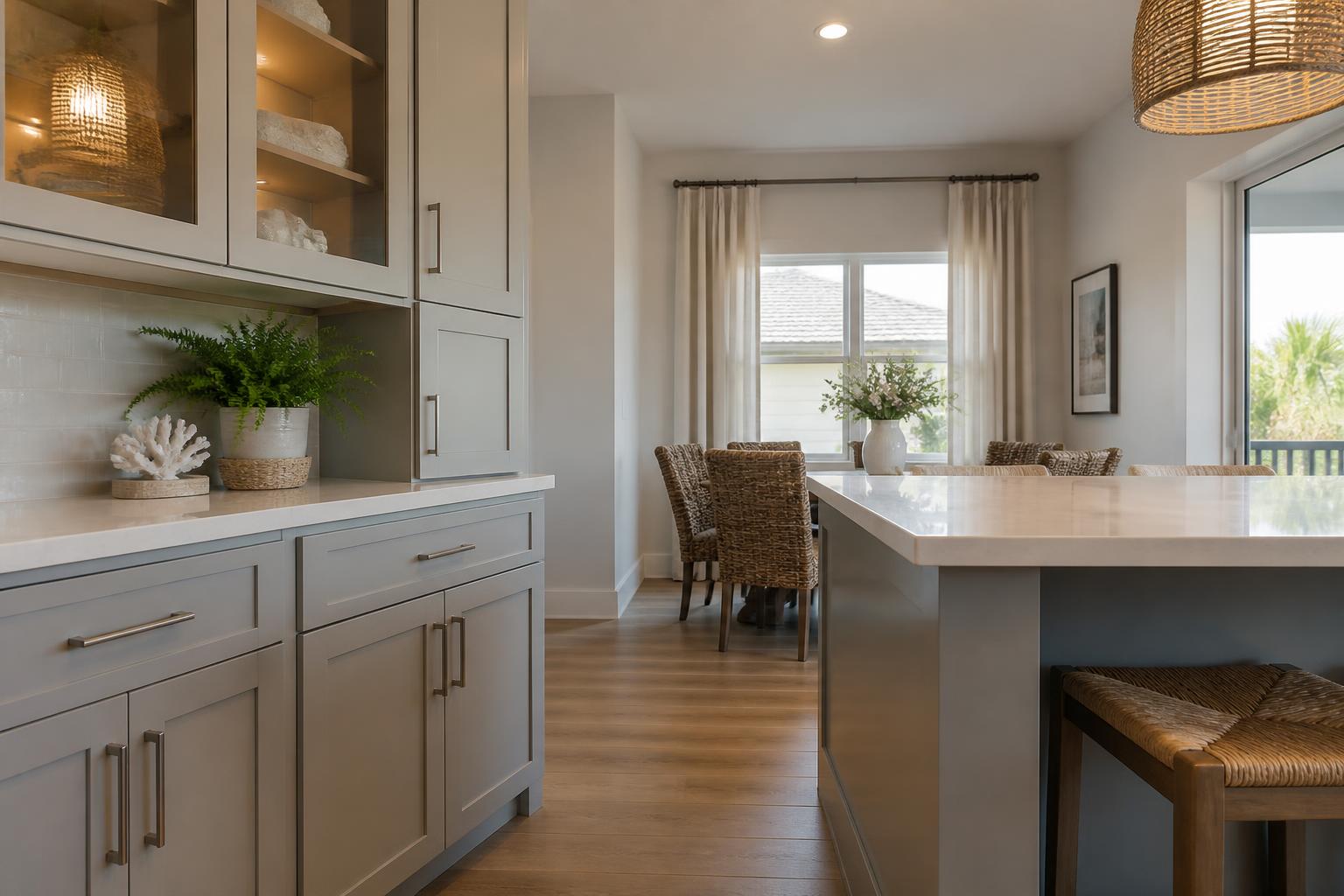
Laminate can reproduce wood-look patterns, stone looks or solid colors, with a consistent appearance from door to door. Solid colors and matte surfaces are especially popular in contemporary kitchens. A printed wood pattern can be convincing, but it repeats and won’t have the depth of real grain up close.
Thermofoil, briefly
Thermofoil gives a smooth, seamless look on shaped doors and is easy to wipe clean. It’s also the surface most sensitive to heat and wear along edges, which we’ll explain below.
Durability, Edges and Everyday Wear
Everyday wear
For most kitchens, durability is what separates a good choice from a regretted one, so it’s worth thinking about how you really use the space.
Laminate is generally known for resisting scratches and surface stains, which suits busy family kitchens. Its weak point tends to be edges and corners. If an edge chips, it’s hard to hide, and repeated impact in the same spot, such as a door corner near a trash pull-out, can wear through.
Wood veneer is also durable when it’s properly sealed, but it can dent or scratch more visibly than laminate, because the surface is real wood under a finish. The upside is that many veneer finishes can be touched up or blended, so a small mark doesn’t always mean a replacement door.
Thermofoil is the one to look at most carefully. Because it’s a film, it can lift or peel when it’s exposed to repeated heat or when its edges are damaged. That makes the area around a range, toaster or dishwasher vent a place to be careful.
Edges, repairs and long-term care
It helps to think ahead to the day something gets damaged, because repairability is where the three surfaces differ most.
- Veneer: Light scratches can often be blended with touch-up products, and a damaged door can sometimes be refinished. Matching a stain years later takes care.
- Laminate: It won’t be refinished, so repair usually means filling a chip or replacing the part. Color is consistent, which makes replacing a single door simpler if the pattern is still available.
- Thermofoil: Peeling edges are difficult to repair neatly. Replacement is the usual answer.
In a wood veneer vs laminate cabinet refacing decision, this is the point many homeowners overlook. Cleaning is straightforward for all three: a soft cloth, mild soap and prompt drying near sinks. Avoid harsh abrasives and soaking wet cloths on any edge. For background on how wood products are specified in cabinetry, the Architectural Woodwork Institute publishes industry standards.
Moisture, Heat and Southwest Florida Conditions
Living in Southwest Florida means thinking about humidity much of the year, and about salt in the air if you’re close to the Gulf or a canal.
Humidity tends to find weaknesses at edges, seams and the bottom of cabinets. Laminate that’s well bonded and well sealed at the edges usually handles everyday humidity well, but if moisture reaches a damaged edge, the layers can separate. Veneer finished with a good protective coat can perform well too. The coating matters here, because bare or poorly sealed wood absorbs and releases moisture, which can lead to movement over time.
Thermofoil’s issue is mainly heat combined with moisture. Steam from a kettle or an oven door that opens near a cabinet can slowly loosen the film at an edge.
Salt air is mostly a hardware concern, since it can dull or corrode metal pulls and hinges, but it can also add a film to surfaces over time. Wiping cabinets regularly and choosing hardware finishes suited to a coastal home are sensible with any surface. The kitchen’s ventilation matters just as much as the material you pick, so run the range hood when you cook.
How to Choose for Your Kitchen
A few questions usually settle it:
- Do you want visible grain and natural variation? Veneer is the closer match.
- Is this a high-traffic family kitchen where low upkeep matters most? Laminate tends to suit that.
- Is the kitchen heavily used for cooking near the cabinets? Be cautious with film surfaces near heat.
- Is the home near the coast? Pay attention to edge sealing, ventilation and hardware finishes whichever surface you choose.
- How do you feel about small changes over time? Real wood ages and can be touched up. Laminate stays consistent but isn’t refinished.
Many 1980s to 2000s Florida homes have sound cabinet boxes and dated fronts, which is exactly where this decision comes up. The condition of the boxes comes first. A new surface can only do its job if the boxes underneath are solid, so we check that before talking about finishes.
Frequently asked questions about wood veneer vs laminate cabinet refacing
Is wood veneer or laminate better in a humid climate?
Neither wins outright. What matters most is how well the edges are sealed and bonded, and how well the kitchen is ventilated. Well-finished veneer and well-bonded laminate can both handle Florida humidity. Surfaces with damaged or unsealed edges are the ones that struggle.
Does wood veneer look like real wood?
Yes, because it is real wood, just in a thin layer. You’ll see natural grain and variation from door to door. If you want every door to look identical, laminate gives a more uniform result.
Can laminate cabinet doors be repaired if they chip?
Small chips can sometimes be filled, though a visible edge repair rarely disappears completely. If damage is more serious, replacing that single door or drawer front is typically a cleaner fix than patching it.
Which materials will I be able to choose from?
We review surface options with you at the free consultation, once we’ve seen your cabinets and talked through how you use the kitchen. Please don’t treat this article as a list of what we offer. We’ll show you what fits your project at the consultation.
If you’re weighing surfaces for your own kitchen, we can look at your boxes and talk through the tradeoffs in person. Call (239) 989-1045 or request a free consultation and we’ll help you narrow it down for your home in Cape Coral, Fort Myers, Port Charlotte or Punta Gorda.


